Inward Journey
A Visual Response to the Music of R. Carlos Nakai
Inward Journey is the third work in my ongoing homage to R. Carlos Nakai, the world-renowned Navajo-Ute flutist whose music has inspired me to explore the relationship between sound, colour, movement and intuition.
The first two works in this series, Silence and Space and Elemental Fusion, were inspired by Nakai's album Silence and Space.
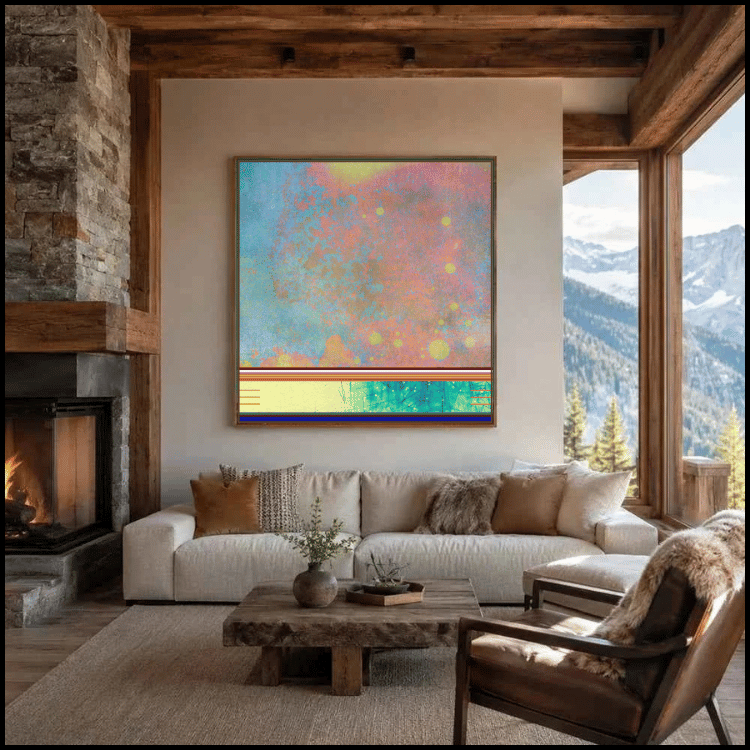

With Inward Journey, I moved into a very different musical experience, finding inspiration in the fifth track, “Inward Journey,” from Canyon Trilogy.
My working process is deliberately intuitive.
I listen to the music repeatedly, allowing myself to become immersed in it while trying to push rational thought aside. I don't want to decide beforehand what the painting should look like. I don't want to illustrate the music or translate it into some literal visual representation.
Instead, I listen.
I allow the sounds to suggest possibilities, perhaps a colour, a shape, a texture, a movement or simply an area of quietness. I follow those suggestions without knowing where they might lead.
With Inward Journey, the music created a particularly spacious and contemplative state.
There is something wonderfully open about the flute in Canyon Trilogy. Rather than filling every available space, the music allows space to exist.
That sense of openness became an important part of how I approached the painting.
Finding the Painting Through Intuition
Allowing the Inner Child to Explore
One of the things I have come to understand about my process is the importance of allowing curiosity to return.
As adults, we often become conditioned to rationalise everything. We ask whether something makes sense, whether something is correct, whether one colour belongs beside another or whether a particular mark has a purpose.
When I work intuitively, I try to let go of that questioning.
I allow the inner child to come forward, the be part of us that simply explores because it is curious.
A colour is placed because it feels right.
A mark appears because I want to see what happens.
One shape leads to another.
There is no need to explain it while it is happening.
That sense of curiosity and discovery was particularly important to Inward Journey. The artwork gradually emerged through the process rather than being imposed upon it.
🔹- See Inward Journey Framed & Ready to Hang Here
Translating Sound Without Illustrating It
Colour, Space and Movement
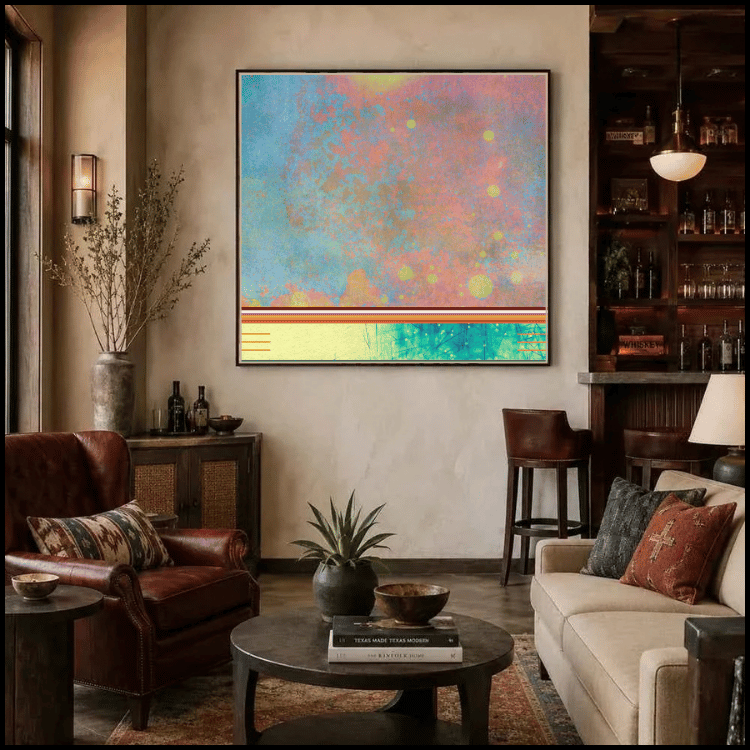
The colours in Inward Journey developed through this process of listening.
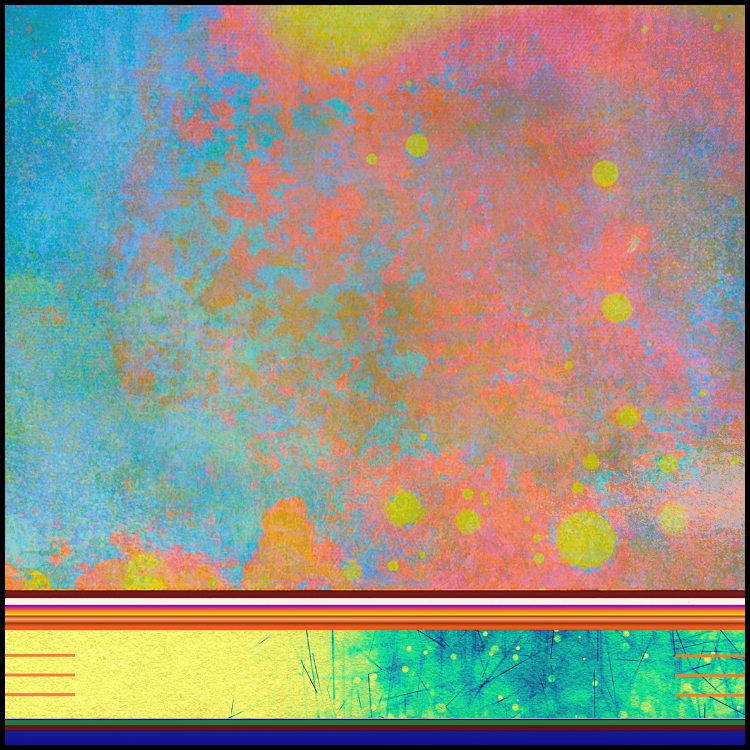
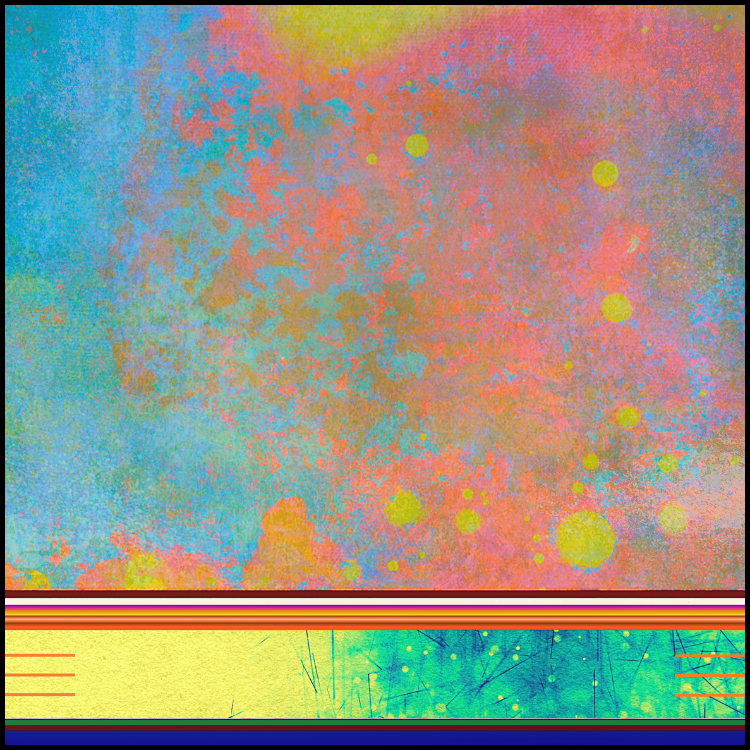
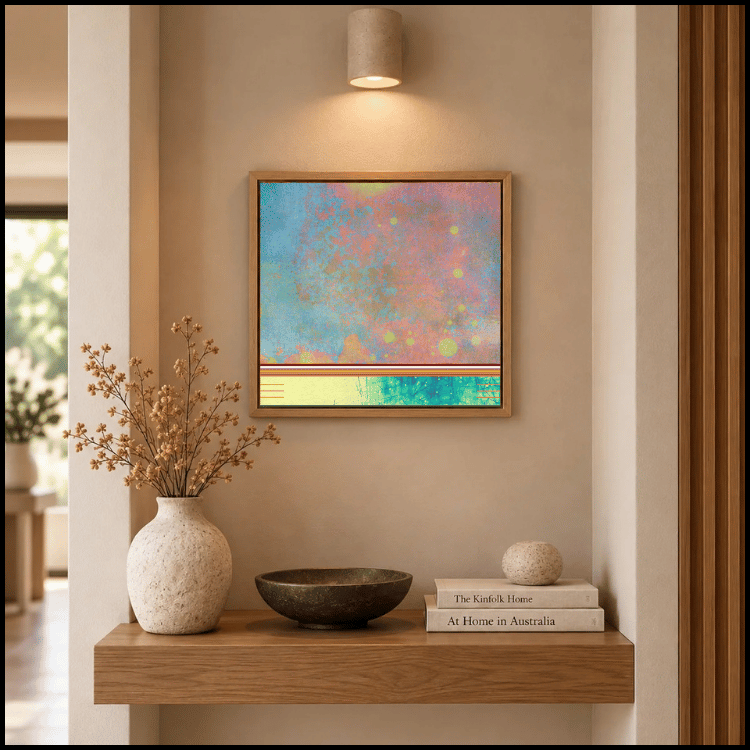
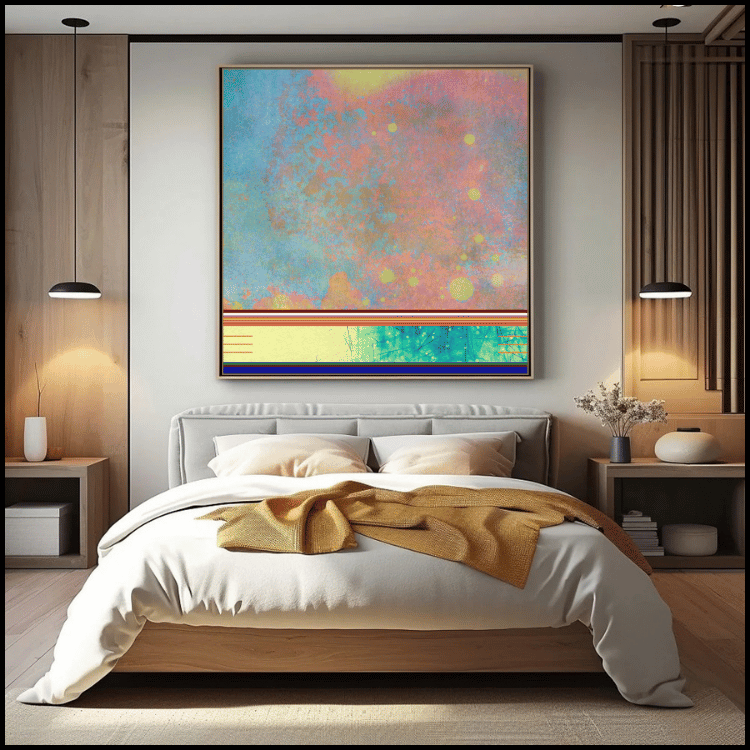
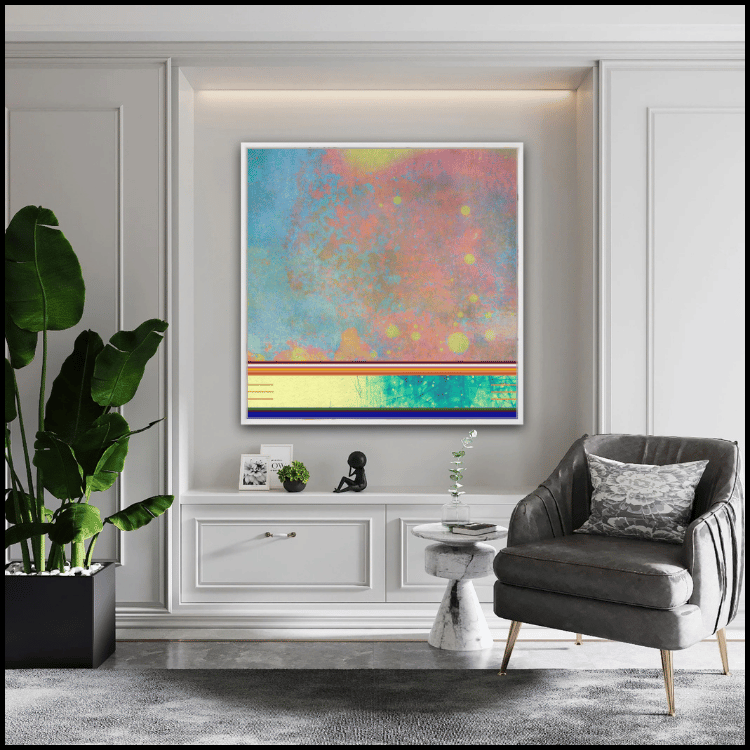
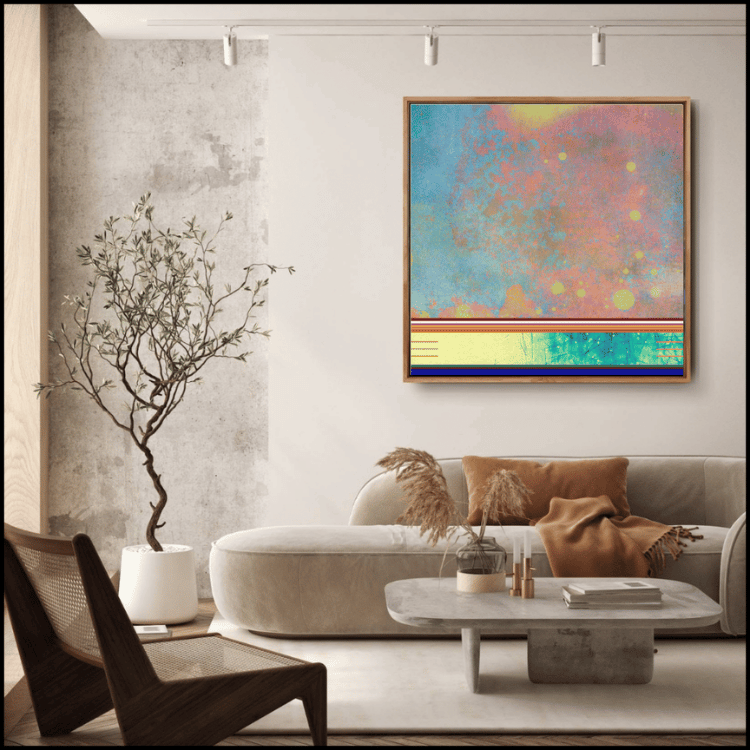
Soft turquoise, blue, coral, pink, yellow and muted earthy tones began to interact across the surface. Some areas remain open and atmospheric, while other sections become denser, more textured and layered.
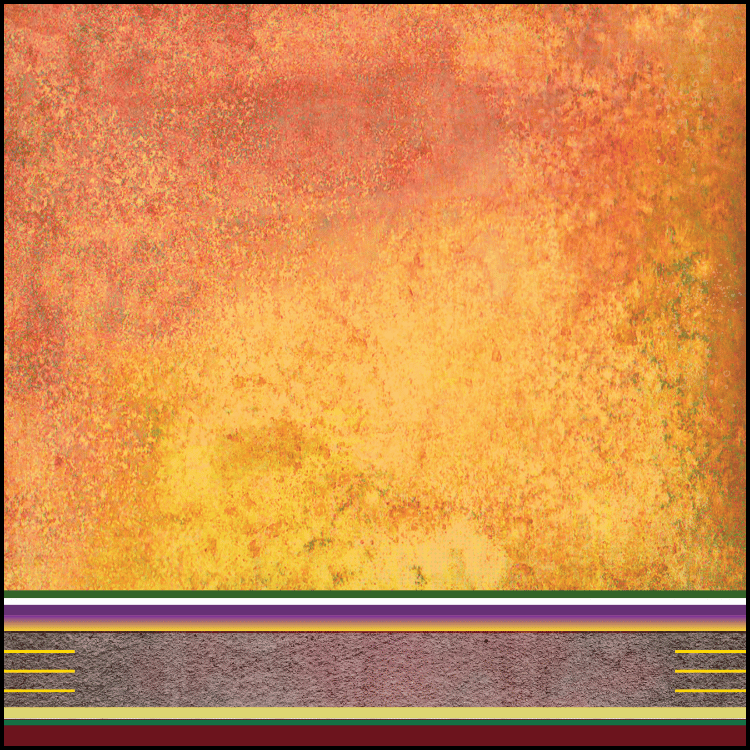
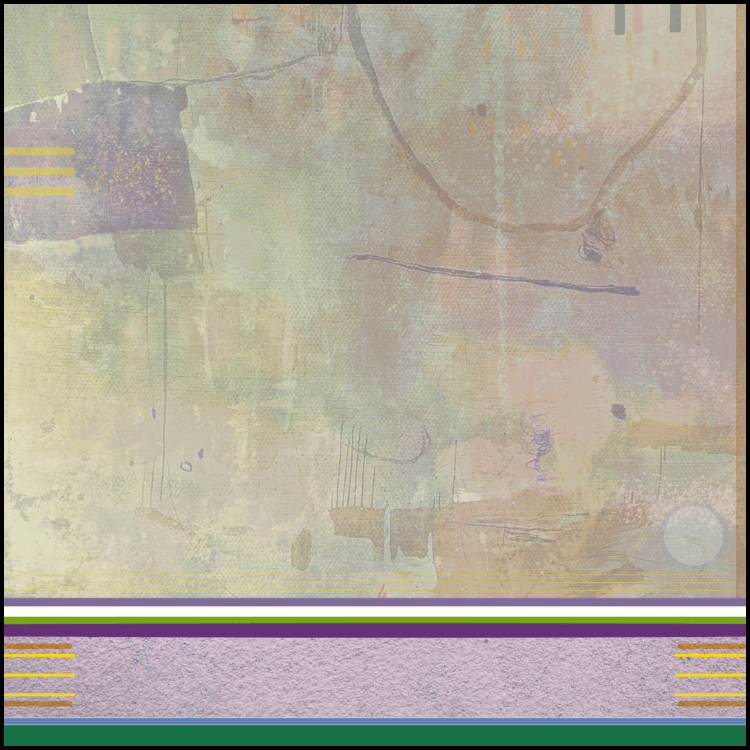
The horizontal elements towards the lower part of the artwork introduce another kind of visual rhythm. They create a contrast between the more expansive, atmospheric upper field and the structured bands beneath it.
For me, these aren't symbols or literal representations of anything within the music.
They are simply the visual language that emerged while I was listening.
The painting became a place where colour, texture and rhythm could coexist.
An Inward Journey Through Sound and Imagination
From the External World to the Inner Landscape
The title Inward Journey came naturally from the experience of making the work.
Although Nakai's music can evoke an extraordinary sense of place, I wasn't interested in trying to paint a literal landscape.
Instead, I became more interested in what happens when listening takes us somewhere internally.
A journey doesn't always require physical movement.
Sometimes it happens quietly, within the imagination.
The music creates the space. Listening opens the door. Intuition begins to wander.
The artwork becomes a record of that journey.
Why Music Continues to Inspire My Art
Music has been an important part of my creative practice for many years.
I don't listen to music simply while I paint. Often, the music is the catalyst for the work itself.
It can influence the pace of my mark-making, the colours I reach for, the density of a surface and even the direction a painting takes.
Most importantly, it can help me move away from rational decision-making and into a more instinctive way of working.
Even though “Inward Journey” is only one track, its atmosphere opened up an entire visual world for me.
The album itself contains numerous possibilities, and I can easily imagine returning to its music again and discovering something entirely different.
That is one of the things I love about working this way.
The music doesn't give me an answer.
It gives me somewhere to begin.
A Continuing Homage to R. Carlos Nakai
Inward Journey continues my personal exploration of music-inspired abstract art and my homage to R. Carlos Nakai.
Each artwork I create in this series will begin with listening, but each arrives somewhere different.
Silence and Space, Elemental Fusion and Inward Journey are not illustrations of Nakai's music.
They are three individual visual responses to the experience of hearing it.
For Inward Journey, I allowed myself to step away from rational thought, listen deeply and follow curiosity wherever it wanted to go.
Perhaps that is what an inward journey really is.
Not knowing exactly where you are going.
Not forcing the destination.
Simply listening, looking and allowing yourself to discover what might be waiting there.
This is what excites me the most, making the invisible, visible.