Piet The Minimalist
There are moments when an artwork begins with an idea, and others when it begins with a collision.
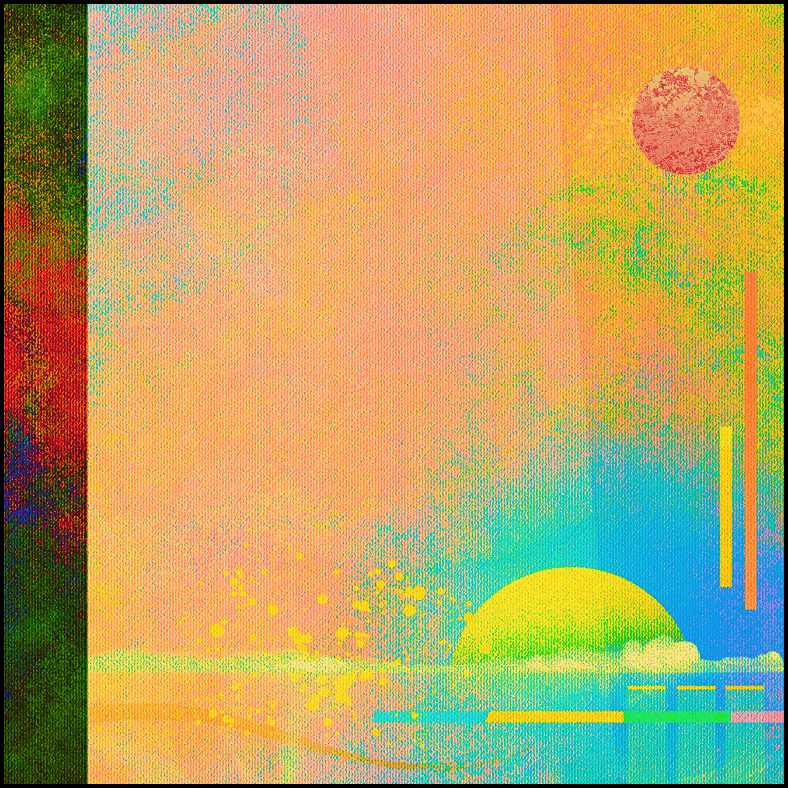
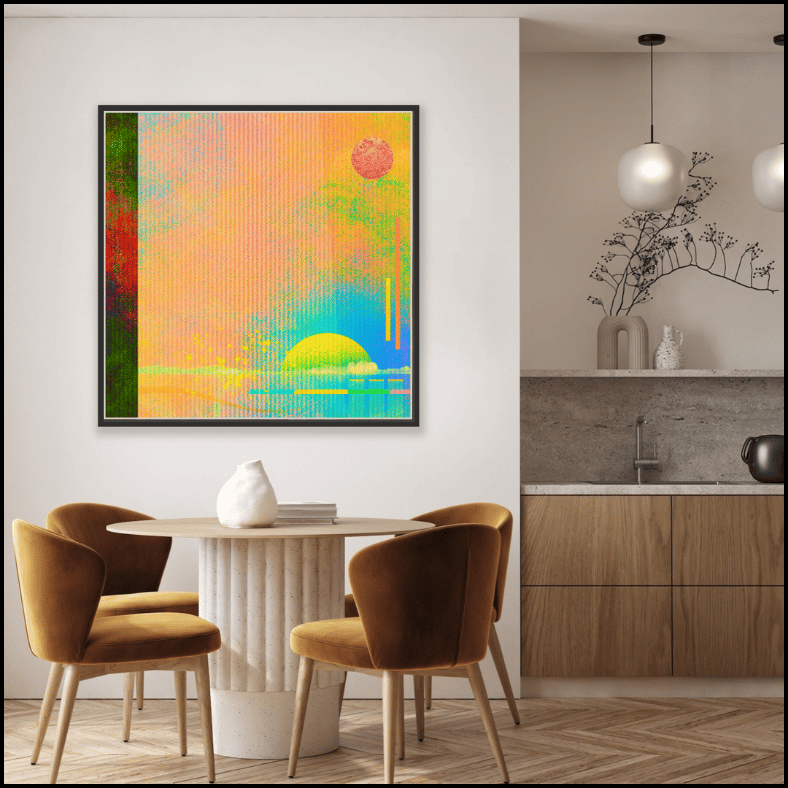
Piet The Minimalist Dropped Into The Bauhaus emerged somewhere between order and accident, geometry and intuition, restraint and the irresistible desire to let colour wander freely.

Wall Art Framed Canvas Prints Ready to Hang
The title offers a playful nod to Piet Mondrian and the visual principles associated with Bauhaus design, but this contemporary abstract artwork is not interested in recreating the past. Instead, it imagines what might happen when those ideas step away from their carefully ordered grids and enter a more instinctive, textured and unpredictable world.
Large areas of warm colour create an open field of space, interrupted by circles, vertical forms and blocks of saturated blue, green, yellow and red. The geometry provides structure, but the surface refuses to become entirely controlled. Small marks, variations in texture and shifting colour introduce a sense of movement and human presence.
I am always interested in this conversation between control and freedom.
A line can suggest a boundary, yet colour can move beyond it. A circle can become a point of balance. An empty space can be as important as a painted one. The challenge is knowing when to add something and, perhaps more importantly, when to leave it alone.
For me, this painting became an exploration of that balance.
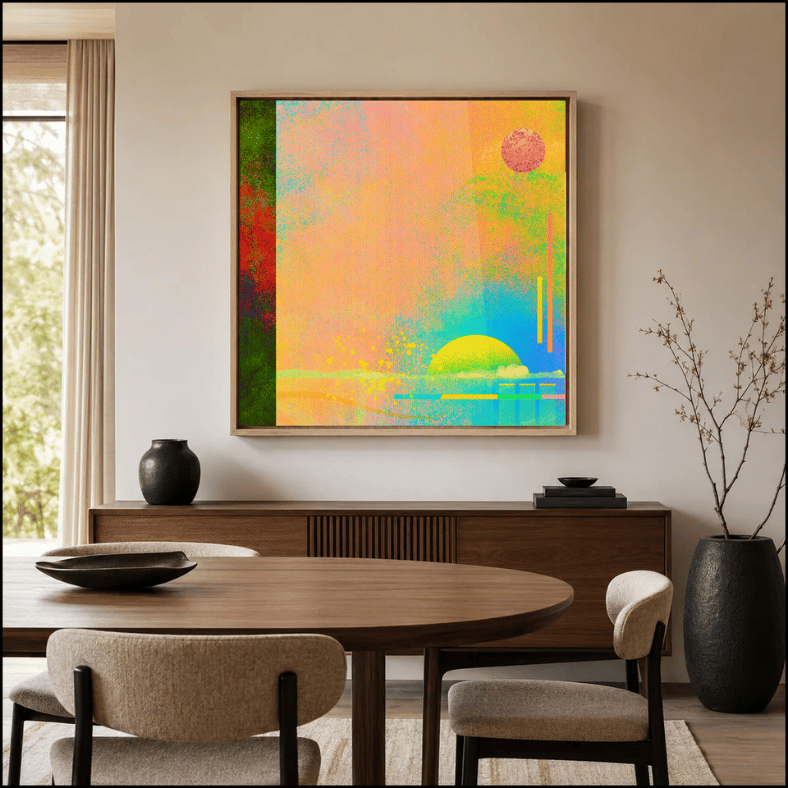
Within an interior, contemporary abstract art has the ability to change the atmosphere of a room. It can become a focal point without overwhelming the architecture, introduce unexpected colour into a neutral palette, or create a visual connection between furniture, materials, light and space.
Contemporary Geometric Abstract Art for Interior Designers
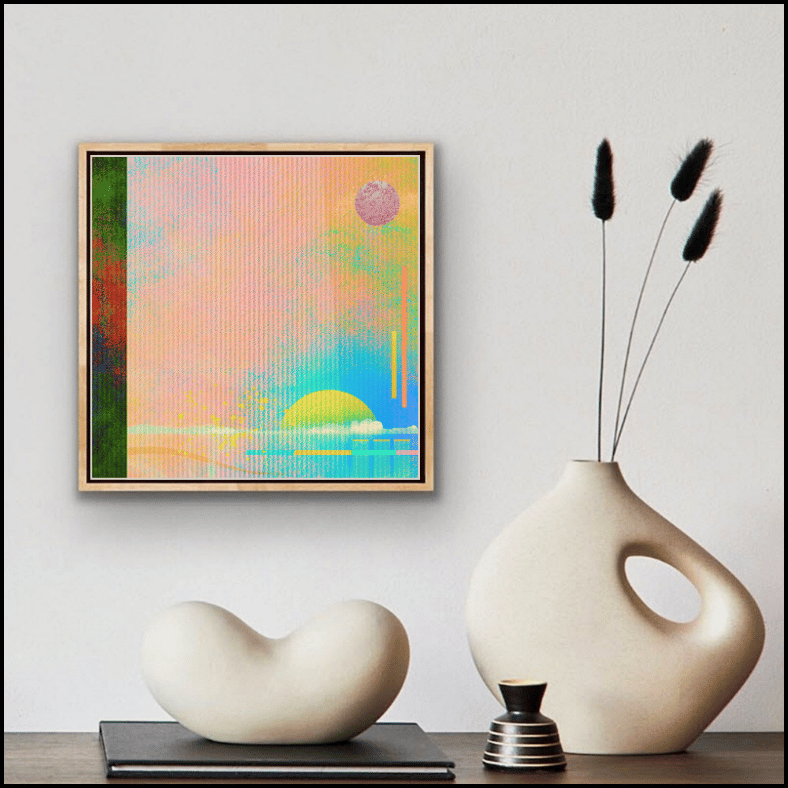
For interior designers, architects, home stylists and commercial design professionals, Piet The Minimalist Dropped Into The Bauhaus offers a bold yet considered visual presence. Its geometric composition can complement contemporary, modern and minimalist interiors, while its layered colour and texture bring warmth and individuality to spaces defined by clean lines and carefully selected materials.
I can imagine this artwork living against concrete, natural timber, white walls, glass or stone. In a contemporary home it could become a central statement within a living room, dining space or entrance. Within a hospitality, office or commercial interior, its colour and geometric energy could bring personality to a reception area, meeting room, lobby or shared space.
Art changes when it enters a room.
The surrounding colours influence it. Natural light reveals different relationships within the surface. Furniture, architecture and negative space become part of the composition.
What begins in the studio as a private conversation between artist, material and intuition continues in another form when the artwork finds its place within an interior.
That is one of the things I love most about creating contemporary art.
A painting is never entirely finished when I put down the brush. In some ways, it continues its journey through the spaces and lives it encounters.
Piet The Minimalist Dropped Into The Bauhaus is a meeting place between structure and spontaneity. It is inspired by the clarity of minimalism, the geometric confidence of modern design and my own belief that an artwork should always leave room for surprise.
Perhaps that is where its real story begins.
When order loosens slightly.
When colour finds its own direction.
And when a carefully constructed world allows itself, just for a moment, to play.